POOL FOUNDATIONS
Helical Piles for Swimming Pools: Settlement, Uplift and Connections
Planning helical foundations for pools in Florida: filled and empty conditions, groundwater, pool-shell connections, access, installation and verification.
Why a pool may need deep support
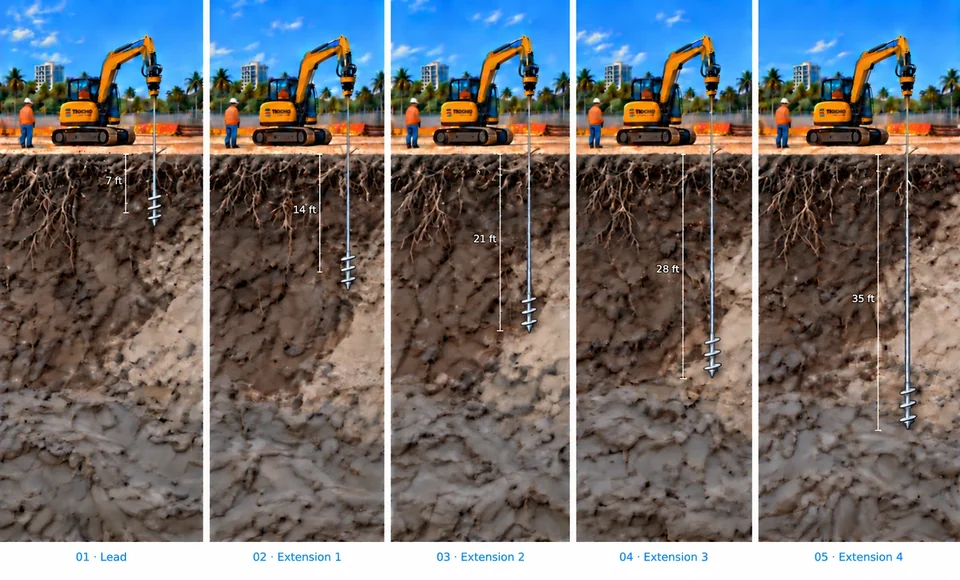
A pool foundation must be considered with the ground, groundwater and the structural pool system. Weak or variable near-surface soils, poorly controlled fill and differential movement can create conditions where an engineered deep-support solution is considered.
Helical piles are one possible option. The purpose is to establish an appropriate load path between the pool structure and suitable ground. They should be selected through the project design, not added to a pool layout simply because a neighboring property used them.
The filled pool and the empty pool are different conditions
A filled pool imposes downward loads from its structure, water and associated supported elements. An empty or partly empty pool may face a different governing condition where groundwater creates upward pressure. The engineer evaluates the relevant combinations and the effect on the shell, foundation and connections.
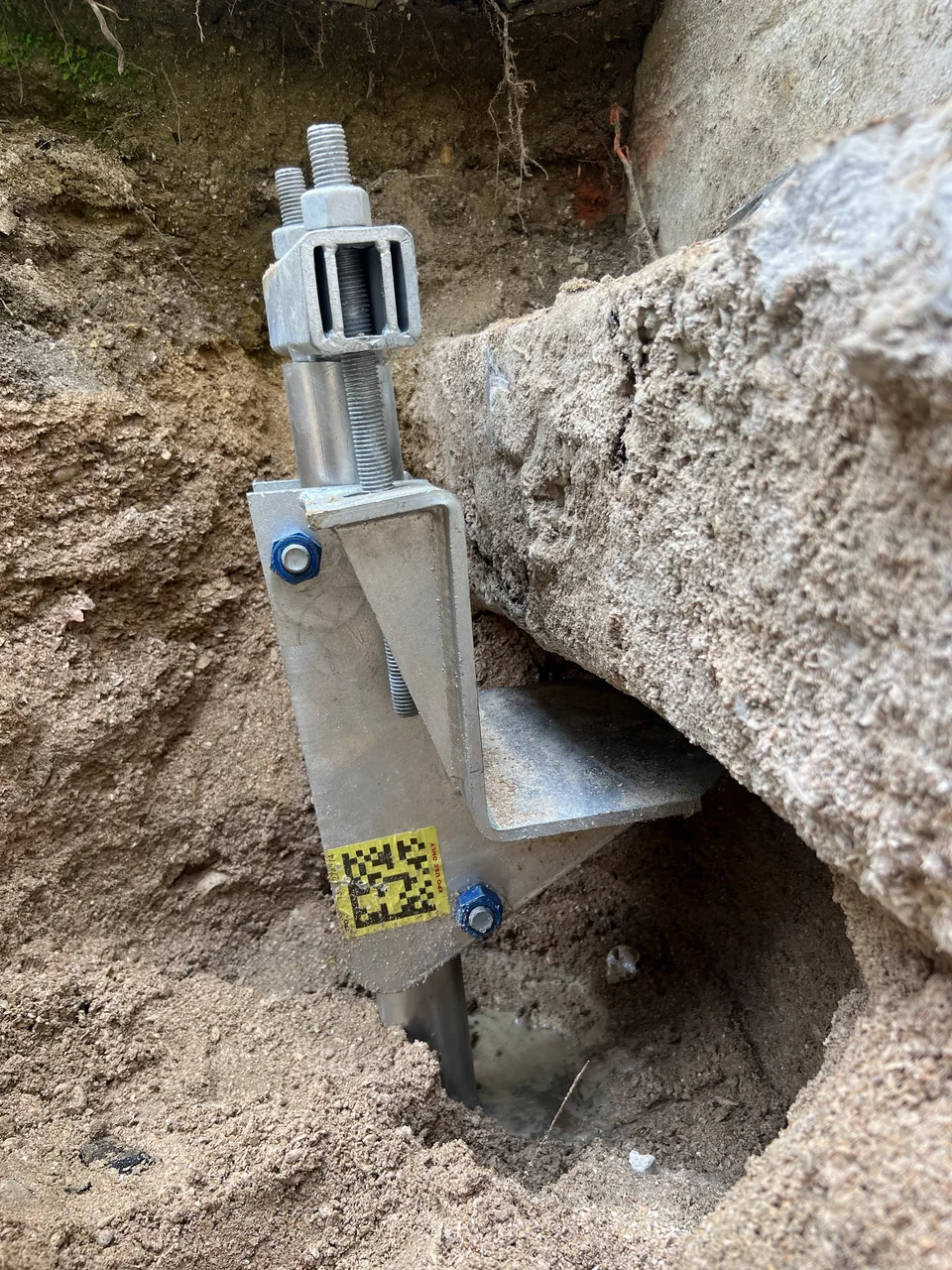
A pile that can carry compression is not automatically an effective hold-down for the pool. If uplift resistance is required, the pile, shaft connections and connection into the shell or supporting structure must provide a continuous, designed tension load path. The distinction matters at every connection, including the pile head.
Coordinate the pool structure before choosing pile locations
The pool designer and foundation engineer should coordinate the shell, beams or supporting frame with the pile positions and expected movements. Concrete, fiberglass and other pool systems do not share one standard connection detail. A connection appropriate for a building footing cannot simply be copied to a pool.
Consider pool walls and floor, steps, attached spa, deck interfaces and adjacent structures as applicable to the design. A pool deck and the water-retaining shell may have different support and movement requirements. Waterproofing, reinforcement continuity and penetrations need their own coordinated details.
Groundwater and site preparation
Use the project ground information to establish the design assumptions for groundwater and the bearing zone. Review construction-stage as well as service conditions. Excavation, temporary water control and the effect on nearby ground must be planned together.
Any pressure-relief or drainage feature must be considered within the pool design and its operating requirements. It should not be assumed to remove all uplift demands or replace a specified structural hold-down system.
Installation and construction coordination
- Review the foundation and pool drawings together. Confirm pile positions, loads, connections, tolerances and construction levels.
- Plan access and handling. Measure gates, routes, headroom and working space for the actual equipment and steel sections.
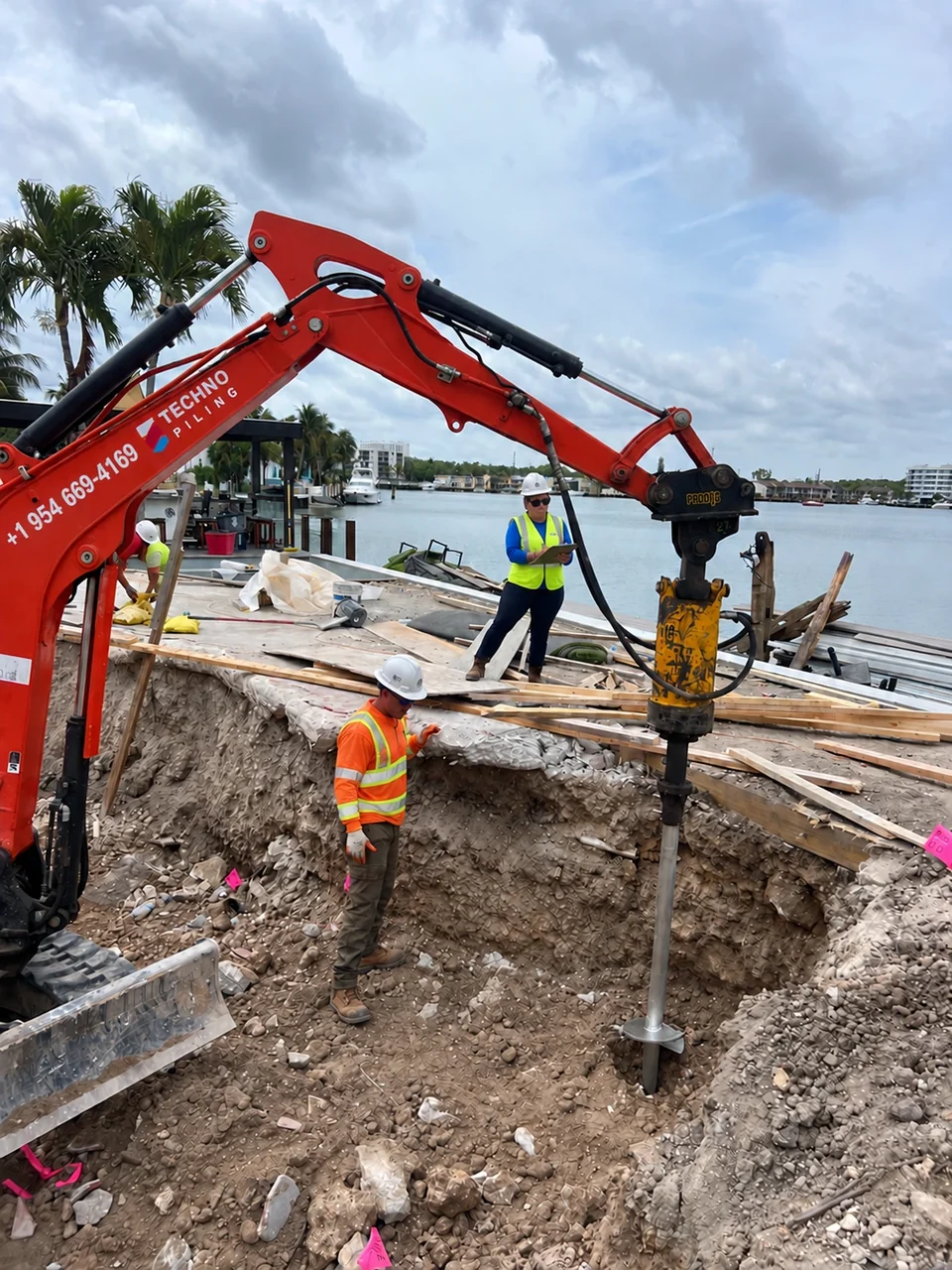
- Install and document the piles. Track configuration, extensions, depth, torque, alignment and any installation issues.
- Complete testing and acceptance. Carry out the specified verification before covering or incorporating the pile heads.
- Build the designed connection. Coordinate the pile heads with reinforcement, shell or frame construction and inspections.
- Complete the pool construction sequence. Respect the strength, curing, waterproofing and commissioning requirements of the connected work.
Advantages and limitations to discuss
Sectional installation and compact equipment can help on selected backyard or constrained sites. The steel foundation element does not need a cast-in-place curing period. That does not eliminate curing or strength requirements for a concrete shell, cap or beam.
Potential constraints include obstructions, the ground profile, available installation torque, corrosion provisions, equipment access and the connection arrangement. Neither a universal pile spacing nor a standard depth can be stated without the project design. Pile support also does not eliminate the need to manage the surrounding excavation and construction sequence.
What to send for a pool-foundation inquiry
Provide the project location, pool and structural plans, geotechnical report, intended shell system, groundwater information where available, site-access photographs and target dates. Include details for an attached spa, deck or nearby structure when relevant. For an existing pool, explain the observed condition and provide any assessment or level records.
A complete estimate should identify installation quantities and assumptions, head connections, testing and responsibilities at the interface with the pool contractor.
General technical guidance. Project drawings, geotechnical recommendations and approved system details govern the work.