METHOD COMPARISON
Auger Cast vs. Helical Piles: Advantages, Limits and Project Selection
Compare CFA/auger cast piles with helical piles: installation, access, ground conditions, curing, verification, project cost and choosing the right system.
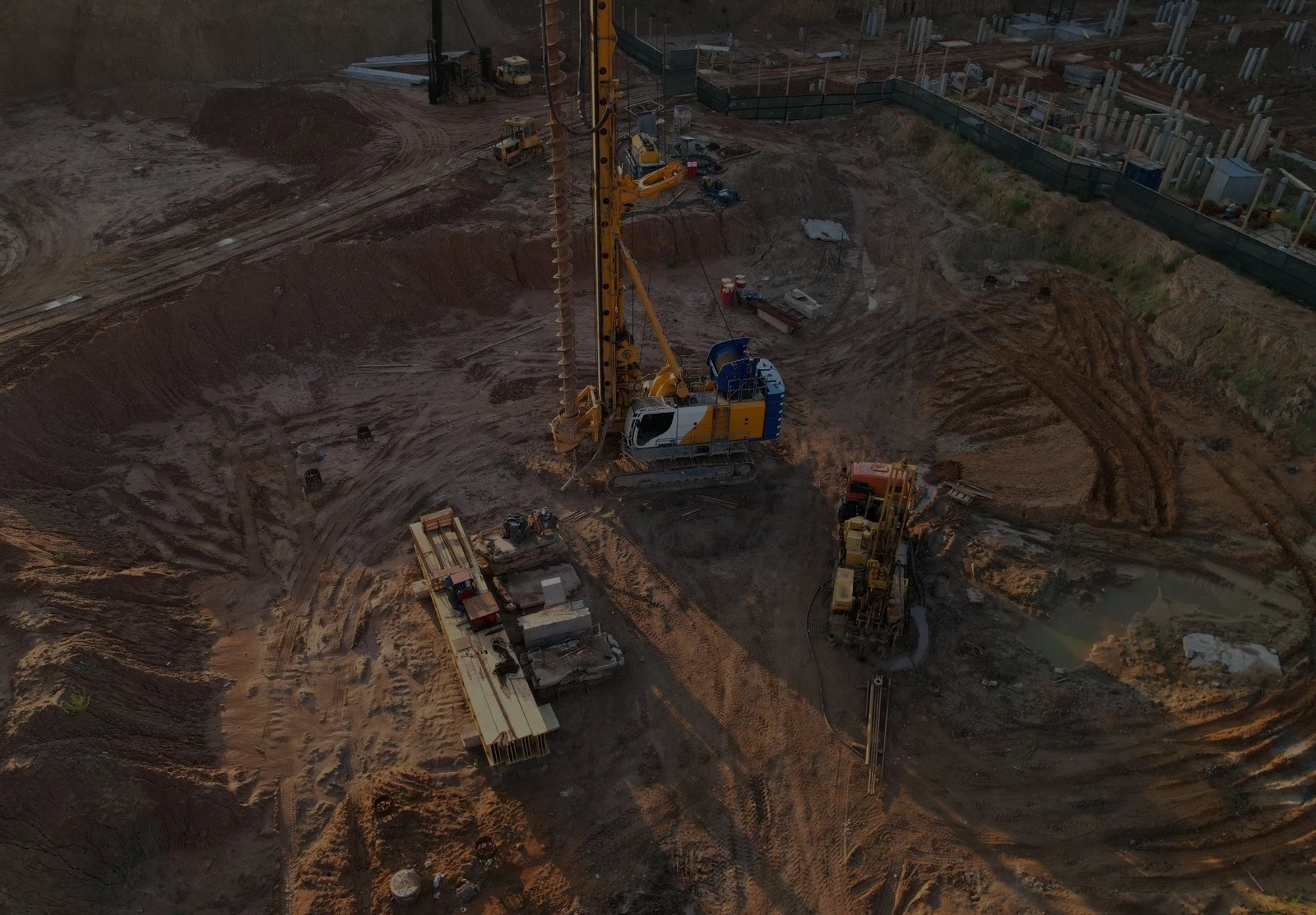
Start with the structure and the ground
Auger cast piles and helical piles can both provide deep foundation support, but they are built and verified differently. Choosing between them starts with the loads, ground conditions, movement limits and construction constraints. It is not a decision that can be made from a single advertised capacity or a price per foot.
For a useful comparison, both proposals should respond to the same engineering requirements. Identify what is included in mobilization, installation, connections, testing, spoil handling and closeout before comparing totals.
How each method is installed
Auger cast piles, commonly described as CFA or ACIP piles, are formed using a continuous-flight auger. The auger advances to the required depth, and grout or concrete is placed through the hollow stem during controlled withdrawal. The specified reinforcement is then installed within the required workability window.
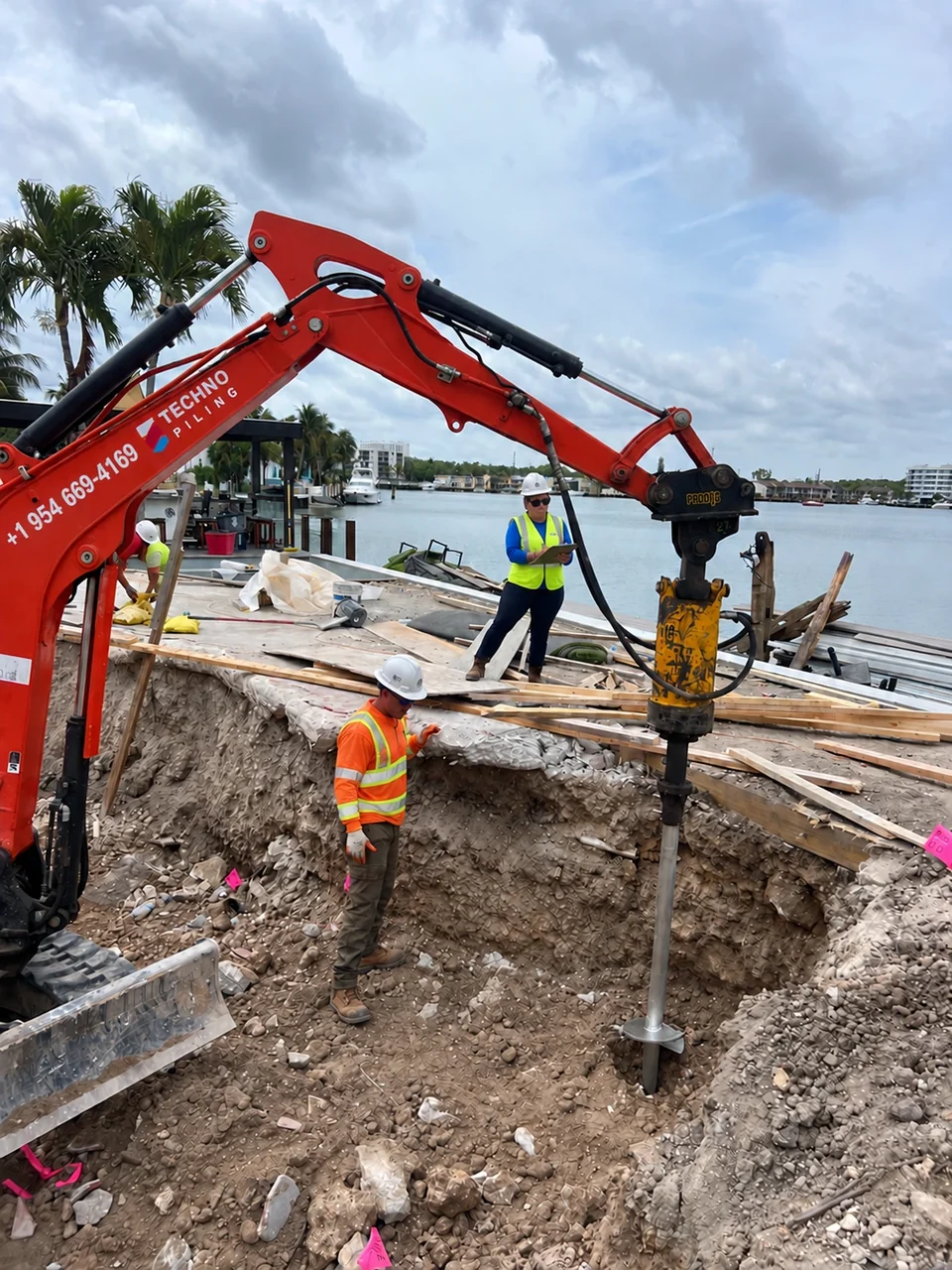
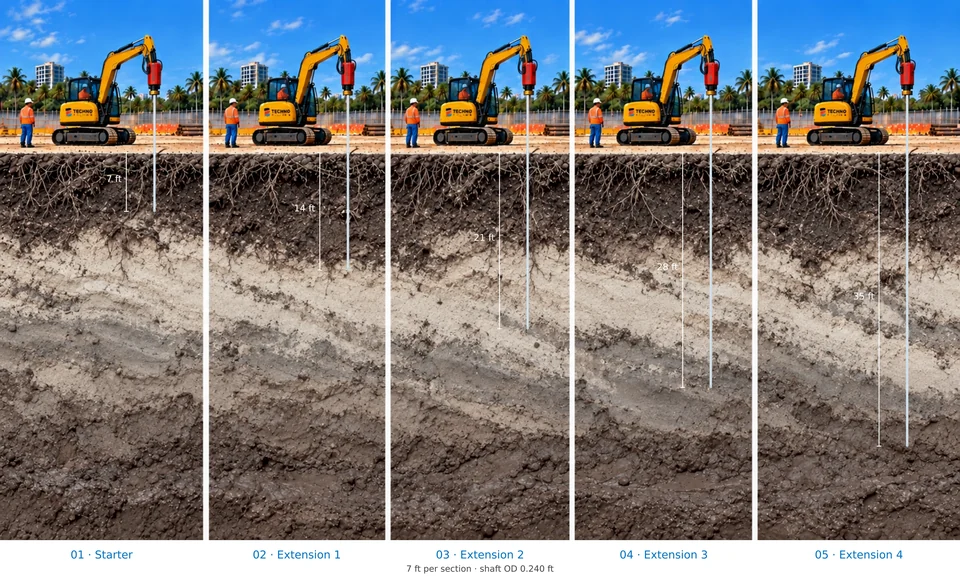
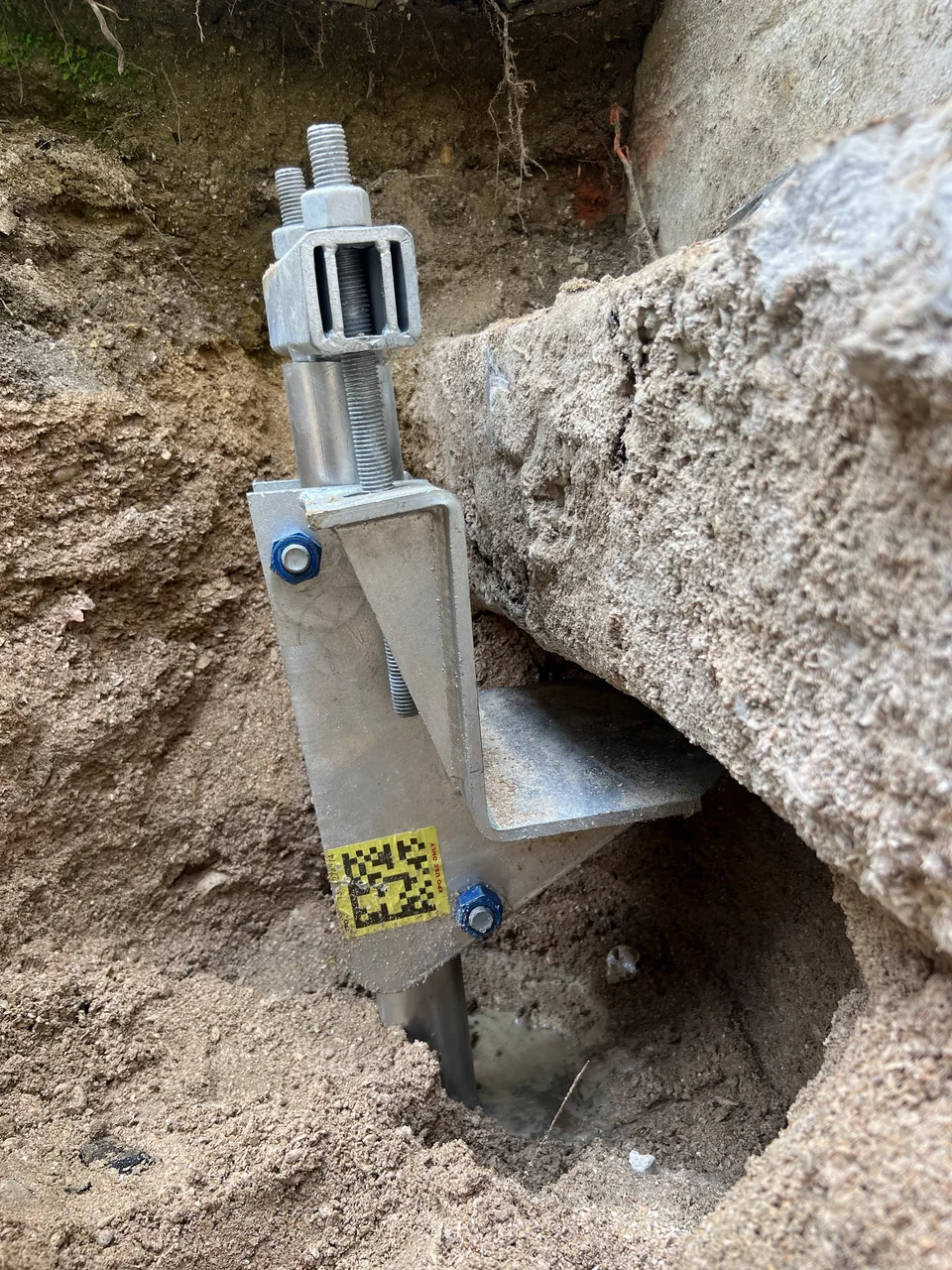
Helical piles use steel shafts with helical plates. A rotary drive advances the lead, extensions are connected to reach the installation requirements, and a cap or bracket transfers load to the structure. Both the shaft and its connections form part of the engineered system.
The main differences
| Decision factor | Auger cast / CFA | Helical piles |
|---|---|---|
| Foundation element | Cast-in-place grout or concrete with specified reinforcement | Sectional steel shaft, helices and connections |
| Installation logistics | Drilling rig, placement supply, pump, reinforcement and spoil handling | Rotary drive, compatible tooling, steel sections and connection handling |
| Site access | Working area must suit rig and placement operations | Compact equipment may help; actual access and torque requirements still govern |
| Loading sequence | Material strength and specified testing determine readiness | The steel pile has no cast-in-place curing period; connected concrete and acceptance requirements still apply |
| Key records | Depth, placement and withdrawal parameters, material volume, reinforcement and tests | Configuration, extensions, depth, torque, connections and specified tests |
| Design checks | Geotechnical and structural resistance, movement and group behavior | Ground resistance, shaft, helices, connections, stability and movement |
Advantages and limitations in context
CFA can suit projects where cast-in-place pile geometry and an organized drilling and placement operation fit the design and site. Its low-vibration drilling process can be useful near existing development. Reliable execution depends on coordinating withdrawal, material supply and reinforcement installation; spoil and placement access must be included in the plan.
Helical piles can offer sectional handling, limited drilling spoil and a flexible installation sequence. They may be attractive for selected restricted-access or underpinning work. The method can be constrained by obstructions, the available installation torque, shaft stability, corrosion provisions and the connection to the supported structure.
Neither method is universally faster, cheaper or more suitable for every Florida soil profile. A compact-looking installation can still require substantial engineering, testing and connection work.
Three questions that improve the comparison
- What must the foundation do? Compare compression, tension, lateral demands and settlement requirements for the actual structure.
- What can the site accommodate? Confirm ground conditions, access, working platform, neighbors and the construction sequence.
- How will acceptance be demonstrated? Compare the installation records, verification tests and connection requirements in each proposal.
As a planning example, an open new-build site with a coordinated concrete supply poses different questions from an existing structure with limited headroom. These are selection scenarios, not completed-project claims or substitutes for a ground investigation.
Compare the complete cost and schedule
Ask each bidder to identify quantities and assumed depths, mobilization, material, splices or reinforcement, pile-head work, testing, obstruction allowances, spoil disposal and the treatment of variations. Establish when the foundation is ready for the next trade. A lower installation rate does not necessarily mean a lower completed-foundation cost.
Send the drawings and geotechnical report to the project team early. A documented alternatives review is more useful than asking which pile is best without defining the project.
General technical guidance. Project drawings, geotechnical recommendations and approved system details govern the work.